The ranking
The 100 best French films
A ranked list of the 100 French films we think everyone should see, from the silent era to the 2020s.
By Eleanor Hale
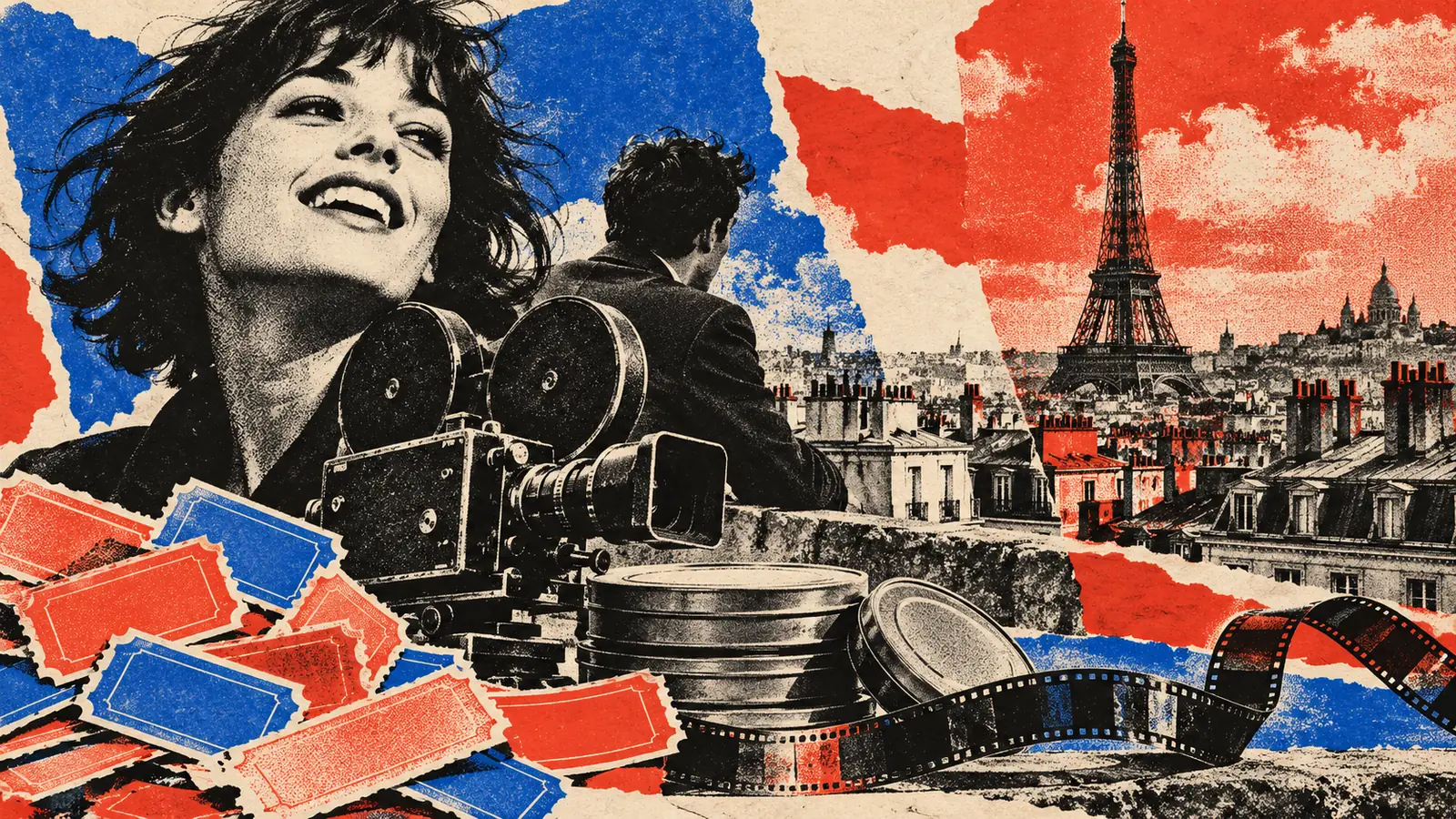
Any list of the best French films starts arguments, and this one should too. We ranked films on three things: how good they are today, how much they changed cinema in France and elsewhere, and how well they still work for someone watching for the first time with subtitles. We counted French productions and co-productions, including films made in France by foreign directors such as Carl Theodor Dreyer, Luis Buñuel and Krzysztof Kieślowski. Films with a full review on this site are linked.
1 to 25
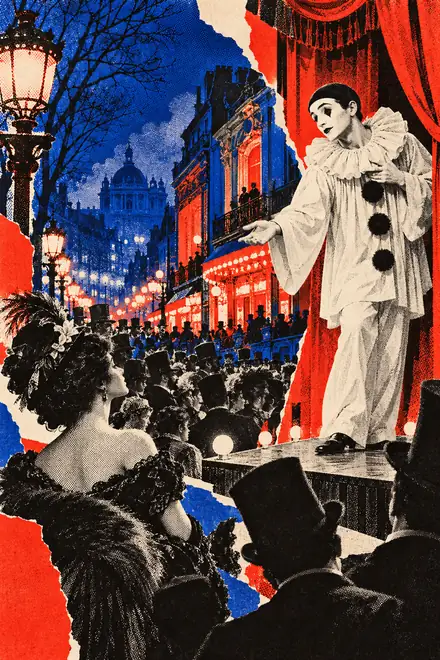
- 1Les Enfants du paradis (Marcel Carné, 1945): theatre, love and Arletty in 1830s Paris.
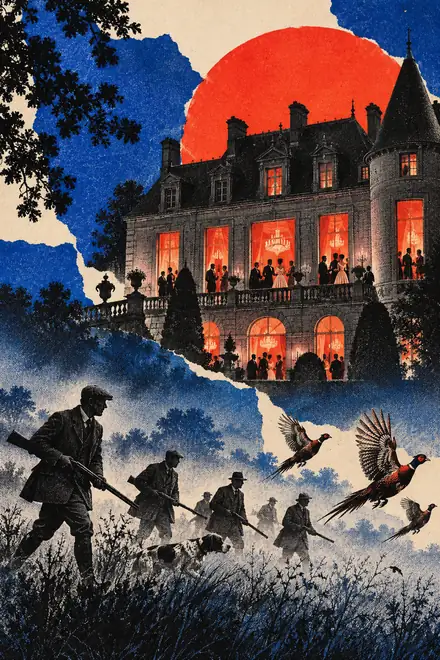
- 2La Règle du jeu (Jean Renoir, 1939): a country-house weekend on the eve of war.
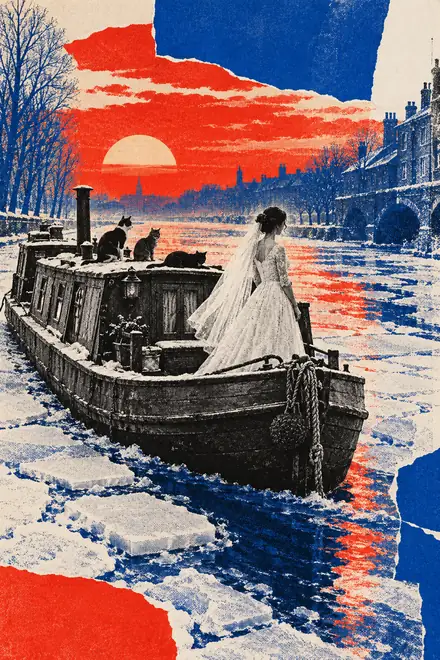
- 3L'Atalante (Jean Vigo, 1934): newlyweds, a barge and Michel Simon.
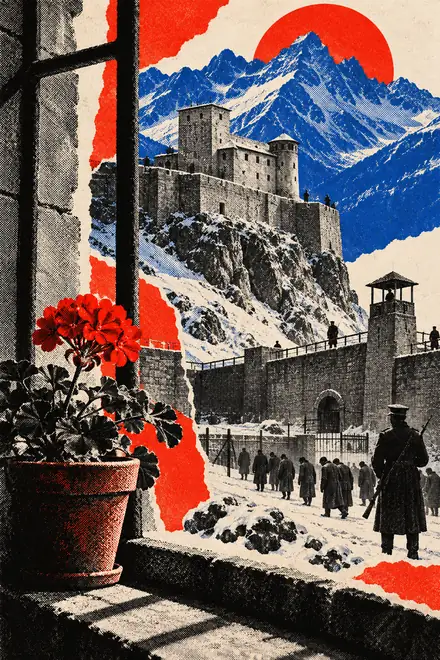
- 4La Grande Illusion (Jean Renoir, 1937): class and friendship in a prison camp.
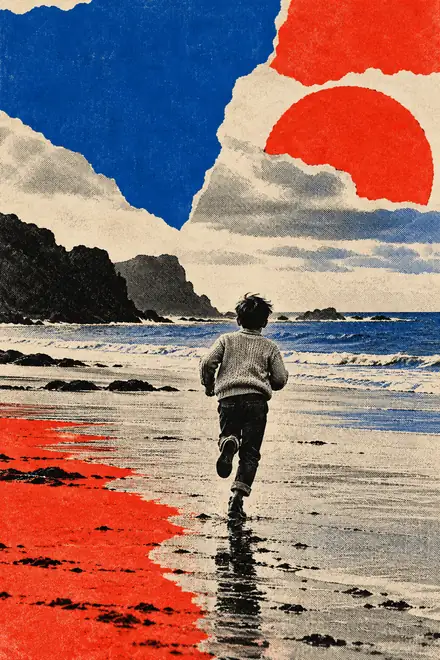
- 5Les Quatre Cents Coups (François Truffaut, 1959): a boy adrift, and the New Wave begins.
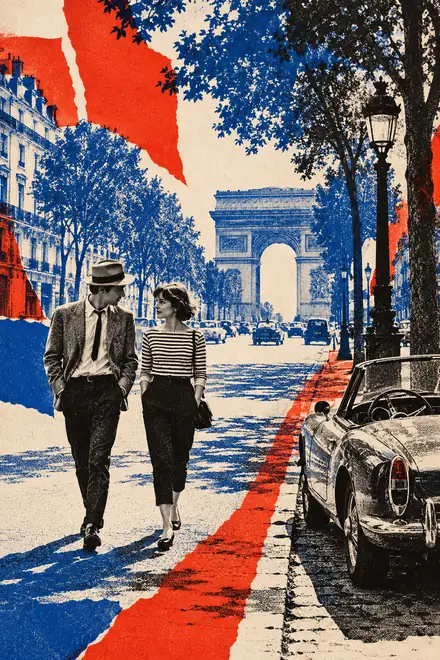
- 6À bout de souffle (Jean-Luc Godard, 1960): jump cuts, Belmondo and the Champs-Élysées.
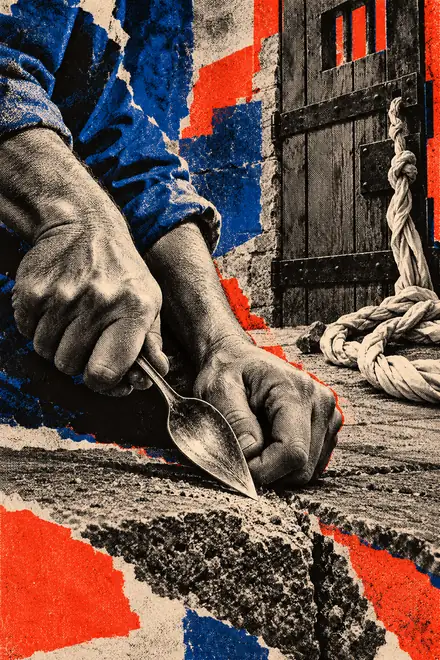
- 7Un condamné à mort s'est échappé (Robert Bresson, 1956): an escape built from a spoon.
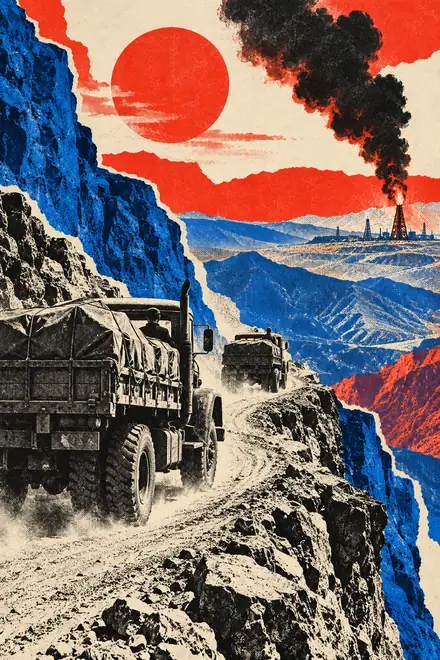
- 8Le Salaire de la peur (Henri-Georges Clouzot, 1953): nitroglycerine on mountain roads.
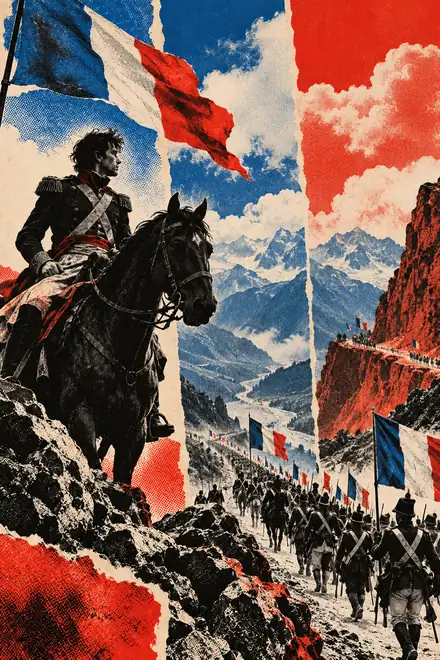
- 9Napoléon (Abel Gance, 1927): the most inventive epic of the silent era.
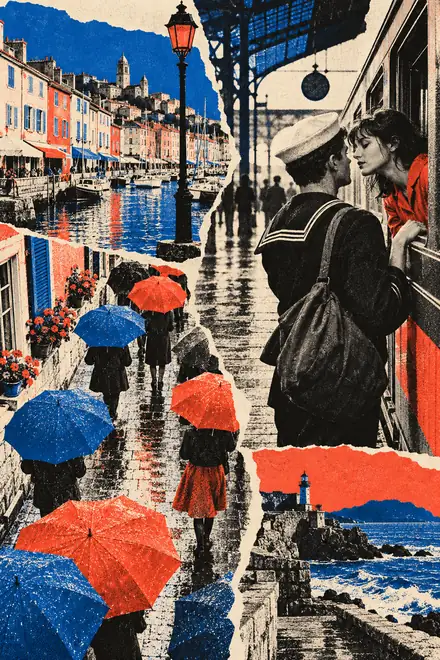
- 10Les Parapluies de Cherbourg (Jacques Demy, 1964): a sung love story worn down by life.
- 11Hiroshima mon amour (Alain Resnais, 1959): memory, war and love in two cities.
- 12La Passion de Jeanne d'Arc (Carl Theodor Dreyer, 1928): the trial of Joan in close-up.
- 13Le Samouraï (Jean-Pierre Melville, 1967): Delon's silent hitman.
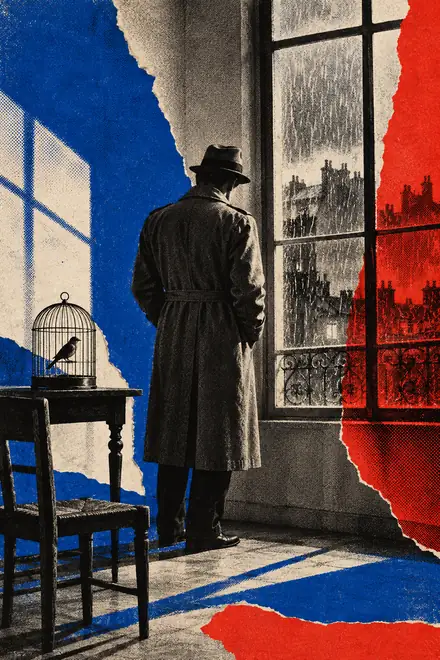
- 14Jules et Jim (François Truffaut, 1962): two friends, one woman, one war.
- 15Le Mépris (Jean-Luc Godard, 1963): a marriage ends on Capri.
- 16Playtime (Jacques Tati, 1967): Monsieur Hulot lost in a city of glass.
- 17Pickpocket (Robert Bresson, 1959): the hands of a thief.
- 18Les Diaboliques (Henri-Georges Clouzot, 1955): a body that will not stay in the pool.
- 19Le Quai des brumes (Marcel Carné, 1938): fog, Gabin and Morgan.
- 20Casque d'or (Jacques Becker, 1952): Simone Signoret among Belle Époque gangsters.
- 21L'Armée des ombres (Jean-Pierre Melville, 1969): the Resistance without heroics.
- 22La Belle et la Bête (Jean Cocteau, 1946): a fairy tale of living candelabras.
- 23Cléo de 5 à 7 (Agnès Varda, 1962): two hours in the life of a singer awaiting a diagnosis.
- 24Pépé le Moko (Julien Duvivier, 1937): a gangster trapped in the Casbah.
- 25Les Vacances de Monsieur Hulot (Jacques Tati, 1953): a seaside holiday, gag by gag.
26 to 50
- 26La Maman et la Putain (Jean Eustache, 1973): three and a half hours of talk and heartbreak.
- 27Le Trou (Jacques Becker, 1960): five prisoners dig their way out.
- 28L'Année dernière à Marienbad (Alain Resnais, 1961): did they meet last year?
- 29Au hasard Balthazar (Robert Bresson, 1966): the life of a donkey.
- 30Le Cercle rouge (Jean-Pierre Melville, 1970): a jewel heist in near silence.
- 31Les Yeux sans visage (Georges Franju, 1960): a surgeon, his daughter and a mask.
- 32Ma nuit chez Maud (Éric Rohmer, 1969): a night of conversation in Clermont-Ferrand.
- 33Le Corbeau (Henri-Georges Clouzot, 1943): poison-pen letters in a small town.
- 34Touchez pas au grisbi (Jacques Becker, 1954): an ageing gangster, played by Gabin.
- 35Pierrot le fou (Jean-Luc Godard, 1965): Belmondo and Anna Karina on the run.
- 36Mon oncle (Jacques Tati, 1958): the modern house and the old neighbourhood.
- 37Le Boucher (Claude Chabrol, 1970): a schoolteacher and a butcher in the Dordogne.
- 38Nuit et brouillard (Alain Resnais, 1956): the camps, in half an hour.
- 39Le Charme discret de la bourgeoisie (Luis Buñuel, 1972): a dinner that never happens.
- 40Jeux interdits (René Clément, 1952): children and death in 1940.
- 41La Haine (Mathieu Kassovitz, 1995): one day in the banlieue.
- 42Céline et Julie vont en bateau (Jacques Rivette, 1974): two women, a haunted house and magic sweets.
- 43Le Feu follet (Louis Malle, 1963): two days in the life of a man who has given up.
- 44Lacombe Lucien (Louis Malle, 1974): a peasant boy joins the collaborators.
- 45Sans toit ni loi (Agnès Varda, 1985): the last weeks of a drifter.
- 46Les Demoiselles de Rochefort (Jacques Demy, 1967): twins, sailors and Gene Kelly.
- 47Un prophète (Jacques Audiard, 2009): a young prisoner rises through the jail.
- 48Beau travail (Claire Denis, 1999): Foreign Legionnaires in Djibouti.
- 49La Nuit américaine (François Truffaut, 1973): the joys and chaos of making a film.
- 50Portrait de la jeune fille en feu (Céline Sciamma, 2019): a painter, her subject, an island.
51 to 75
- 51Le Dernier Métro (François Truffaut, 1980): a Paris theatre under the Occupation.
- 52Trois Couleurs: Bleu (Krzysztof Kieślowski, 1993): Juliette Binoche after a loss.
- 53Belle de jour (Luis Buñuel, 1967): Catherine Deneuve's secret afternoons.
- 54Le Jour se lève (Marcel Carné, 1939): a man waits for dawn in a besieged room.
- 55Plein soleil (René Clément, 1960): Alain Delon as Tom Ripley.
- 56Vivre sa vie (Jean-Luc Godard, 1962): Anna Karina in twelve tableaux.
- 57Ascenseur pour l'échafaud (Louis Malle, 1958): a murder, a lift and Miles Davis.
- 58Lola (Jacques Demy, 1961): a cabaret dancer waits for her first love in Nantes.
- 59Anatomie d'une chute (Justine Triet, 2023): a death in the snow and a marriage on trial.
- 60Au revoir les enfants (Louis Malle, 1987): a Catholic school hides Jewish boys.
- 61Caché (Michael Haneke, 2005): videotapes on a doorstep.
- 62Le Fabuleux Destin d'Amélie Poulain (Jean-Pierre Jeunet, 2001): Montmartre in bright colours.
- 63Jean de Florette (Claude Berri, 1986): a spring, a hunchback and two schemers.
- 64Manon des sources (Claude Berri, 1986): the revenge that follows.
- 65La Grande Vadrouille (Gérard Oury, 1966): de Funès and Bourvil cross occupied France.
- 66Boudu sauvé des eaux (Jean Renoir, 1932): a tramp upends a bookseller's home.
- 67Le Crime de Monsieur Lange (Jean Renoir, 1936): a workers' cooperative and a crook.
- 68La Kermesse héroïque (Jacques Feyder, 1935): Flemish townswomen charm an army.
- 69La Femme du boulanger (Marcel Pagnol, 1938): the baker's wife runs off, the village starves.
- 70Un homme et une femme (Claude Lelouch, 1966): widow and widower in Deauville.
- 71Z (Costa-Gavras, 1969): a political murder and its cover-up.
- 72Les Tontons flingueurs (Georges Lautner, 1963): gangsters, dialogue and a kitchen scene.
- 73Cyrano de Bergerac (Jean-Paul Rappeneau, 1990): Depardieu and the nose.
- 74Holy Motors (Leos Carax, 2012): one man, a limousine and a day of strange appointments.
- 75La Double Vie de Véronique (Krzysztof Kieślowski, 1991): two women, one soul.
76 to 100
- 76La Guerre des boutons (Yves Robert, 1962): village boys at war for buttons.
- 77Le Retour de Martin Guerre (Daniel Vigne, 1982): an impostor in a 16th-century village.
- 78Les Misérables (Ladj Ly, 2019): police and kids in Montfermeil.
- 79La Vie d'Adèle (Abdellatif Kechiche, 2013): a first love, in close-up.
- 80Intouchables (Olivier Nakache and Éric Toledano, 2011): a carer and his employer.
- 81The Artist (Michel Hazanavicius, 2011): a silent film about the coming of sound.
- 82Le Dîner de cons (Francis Veber, 1998): the idiot is not who you think.
- 83La Cage aux folles (Édouard Molinaro, 1978): a Saint-Tropez cabaret and a family dinner.
- 84Le Père Noël est une ordure (Jean-Marie Poiré, 1982): Christmas Eve at a helpline.
- 85Les Visiteurs (Jean-Marie Poiré, 1993): a medieval knight in the 1990s.
- 86Diva (Jean-Jacques Beineix, 1981): an opera singer, a bootleg tape and a chase.
- 87Delicatessen (Jean-Pierre Jeunet and Marc Caro, 1991): a butcher's building after the apocalypse.
- 88Les Amants du Pont-Neuf (Leos Carax, 1991): two homeless lovers on a closed bridge.
- 89De battre mon cœur s'est arrêté (Jacques Audiard, 2005): a thug who wants to play the piano.
- 90Fanfan la Tulipe (Christian-Jaque, 1952): Gérard Philipe as a swashbuckling soldier.
- 91Zéro de conduite (Jean Vigo, 1933): a schoolboy revolt.
- 92Les Vampires (Louis Feuillade, 1915): Musidora and a gang of Paris criminals.
- 93Fantômas (Louis Feuillade, 1913): the first master criminal of the screen.
- 94Le Voyage dans la Lune (Georges Méliès, 1902): a rocket in the eye of the moon.
- 95Un chien andalou (Luis Buñuel, 1929): a short, shocking burst of surrealism.
- 96La Chute de la maison Usher (Jean Epstein, 1928): Poe in slow motion.
- 97La Roue (Abel Gance, 1923): a railwayman's tragedy, cut like a symphony.
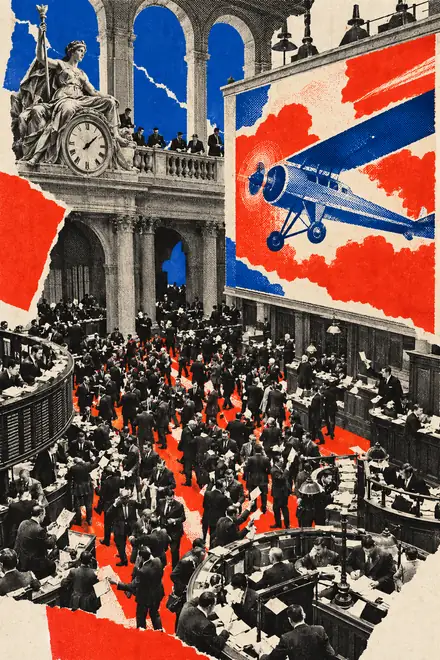
- 98L'Argent (Marcel L'Herbier, 1928): the Paris Bourse as a battlefield.
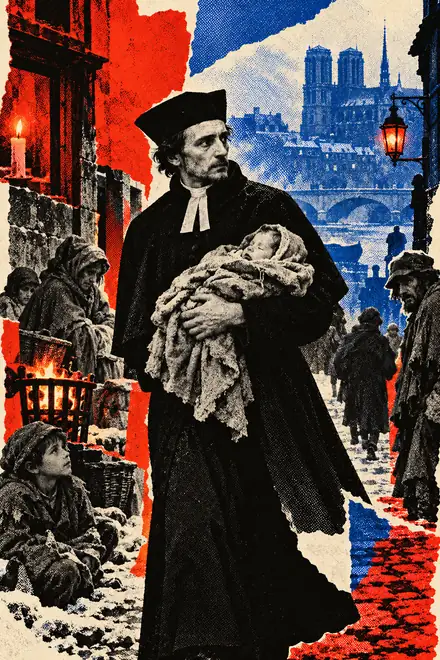
- 99Monsieur Vincent (Maurice Cloche, 1947): Pierre Fresnay as Vincent de Paul.
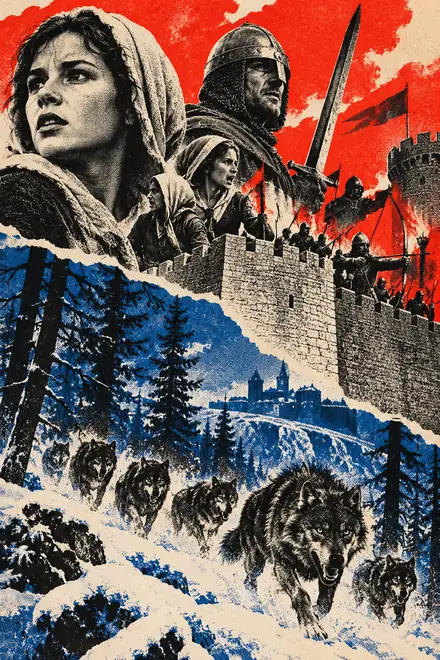
- 100Le Miracle des loups (Raymond Bernard, 1924): Louis XI against Burgundy.
How to use this list
If you are new to French cinema, start with the first ten and with the comedies that suit your taste. If you prefer to go period by period, our lists of the best films by decade, from the 1910s to the 2010s, go into more detail. A short history of French cinema explains how these films fit together.