Coming-of-age drama · 1959 · France
Les Quatre Cents Coups 1959
Directed by François Truffaut. Known in English as The 400 Blows.
- DirectorFrançois Truffaut
- Running time99 min
- CountryFrance
- Decade1950s
Review by Eleanor Hale
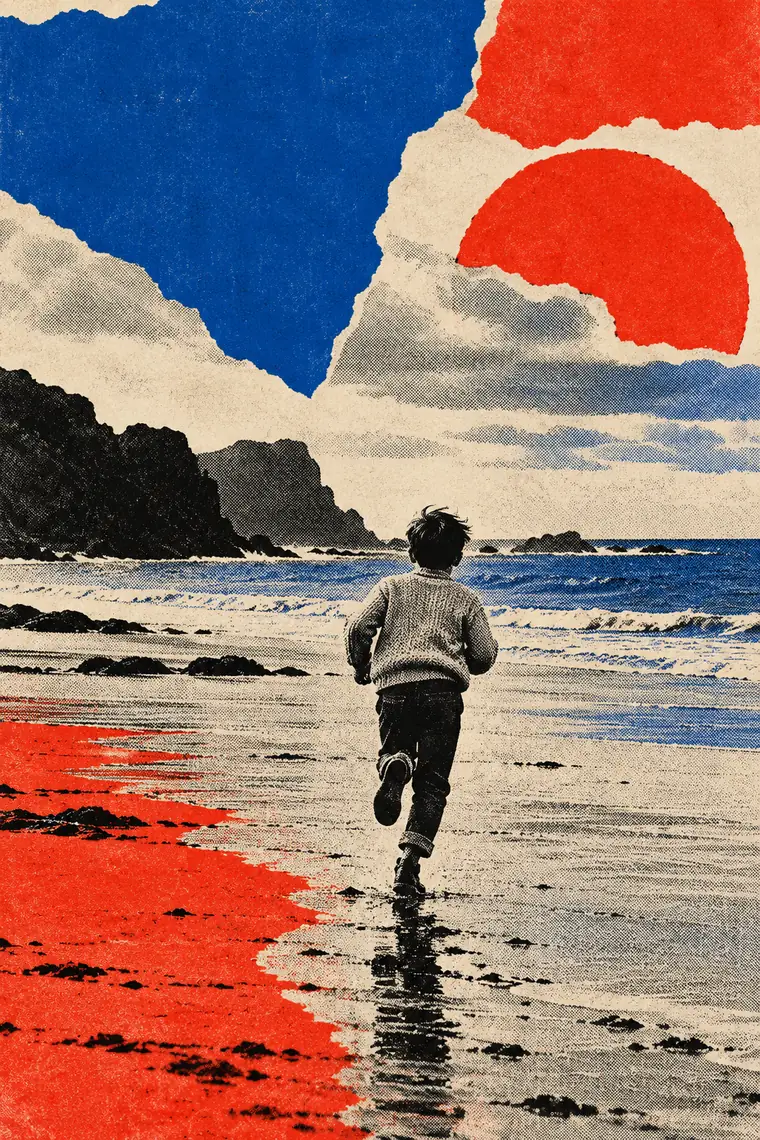
Les Quatre Cents Coups (The 400 Blows) is François Truffaut's first feature, made in 1959 when he was 27 and still best known as a fierce young critic. It follows Antoine Doinel, a twelve-year-old Parisian boy who is neglected at home, picked on at school and drifts into lies, truancy and petty theft until he is sent to a reform school. The film draws heavily on Truffaut's own childhood. It won him the prize for best director at Cannes, launched the French New Wave in the eyes of the world, and began the five-film story of Antoine Doinel, played each time by Jean-Pierre Léaud. Its final shot, a freeze-frame of the boy's face on a beach, is one of the most famous endings in cinema.
Antoine at home and at school
Antoine lives in a cramped flat with his mother, who is impatient and distracted, and his stepfather, who is friendly but weak. He sleeps in a sleeping bag in the hallway. At school the teacher the boys call Petite Feuille ("Little Leaf") punishes him constantly, sometimes for things he has not done.
With his friend René he skips school, goes to the cinema, rides the Rotor at a funfair and wanders the streets of Paris. One day, playing truant, he sees his mother kissing a stranger. Caught out by the teacher the next day, he says his absence was because his mother had died. The lie collapses within hours.
From mischief to the police
Things go wrong in small steps. Antoine copies a passage by Balzac so passionately in an essay that he is accused of plagiarism. A candle in his shrine to Balzac sets fire to a curtain. He runs away, spends a night in a printing works, steals a typewriter from his stepfather's office and is caught trying to return it. His parents hand him over to the police. He spends a night in a cell with prostitutes and thieves, and is sent to an observation centre for young offenders near the sea.
The interview
At the centre, a psychologist we never see questions Antoine about his life. Léaud improvised much of his answers, and the scene, filmed in a single take on his face, has the truth of a documentary. It is the heart of the film.
How the New Wave began
Truffaut had attacked the polished, studio-bound French cinema of the 1950s in the magazine Cahiers du cinéma. Here he did what he had called for: a small budget, real streets, a light camera, young unknown actors and a personal story. Henri Decaë, who had shot films for Jean-Pierre Melville, filmed Paris in wide black-and-white CinemaScope.
The title comes from the French expression faire les quatre cents coups, to get up to all sorts of mischief. The English title translates it literally, which makes it sound more violent than it is.
The Doinel films
Truffaut followed Antoine for twenty years: a short film, Antoine et Colette (1962), then Baisers volés (1968), Domicile conjugal (1970) and L'Amour en fuite (1979). Watched together, they form an unusual portrait of an actor and a character growing up side by side.
Les Quatre Cents Coups is the obvious place to start with Truffaut and with the New Wave. Continue with Godard's À bout de souffle, which Truffaut co-wrote, and Truffaut's own Jules et Jim. The rest of the period is in the best French films of the 1950s.