Drama · 1963 · France, Italy
Le Mépris 1963
Directed by Jean-Luc Godard. Known in English as Contempt.
- DirectorJean-Luc Godard
- Running time101 min
- CountryFrance, Italy
- Decade1960s
Review by Eleanor Hale
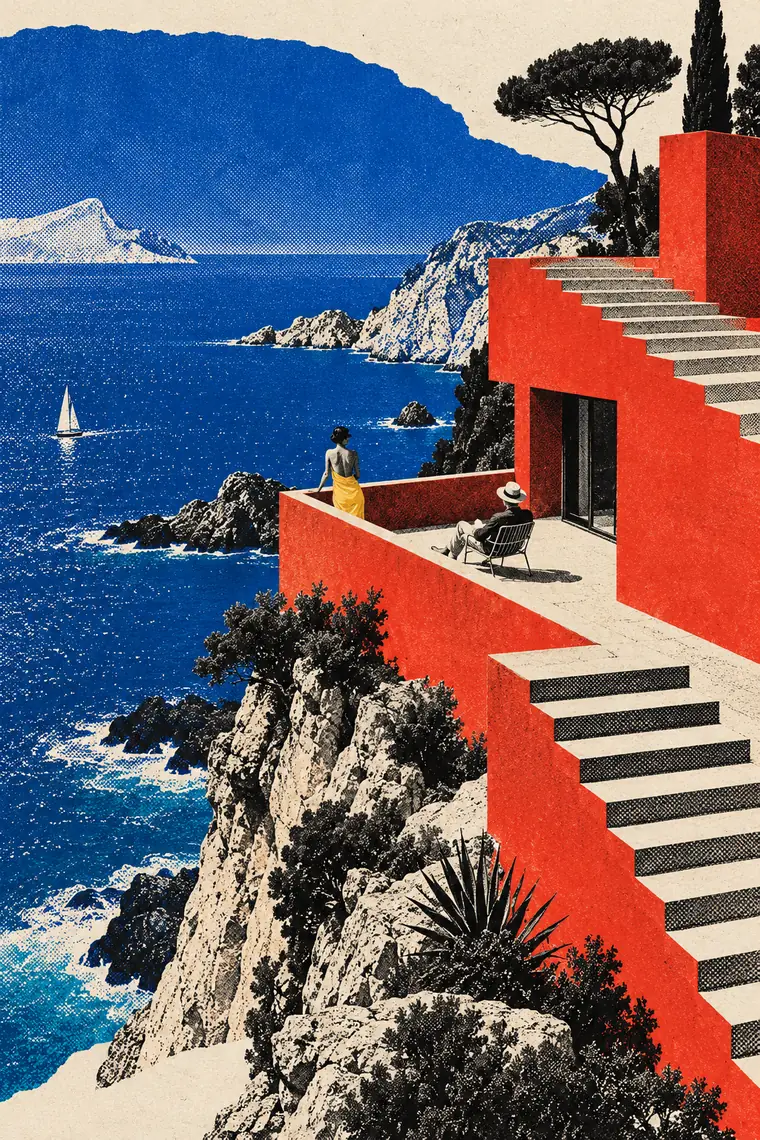
Le Mépris (Contempt) is Jean-Luc Godard's 1963 film about the end of a marriage and the making of a film. Paul Javal, a French playwright played by Michel Piccoli, is hired by a brash American producer, Jeremy Prokosch (Jack Palance), to rewrite the script of an adaptation of Homer's Odyssey being directed in Rome by Fritz Lang, who plays himself. In a single afternoon Paul's wife Camille, played by Brigitte Bardot, begins to despise him, and he cannot understand why. Shot in colour and CinemaScope, with Georges Delerue's sombre string theme repeating like a heartbeat and a final act on the rooftop of the Villa Malaparte on Capri, it is Godard's most beautiful film and one of the best films ever made about cinema.
A producer, a director and a writer
The film opens with its own credits read aloud over a shot of a camera tracking towards us along a rail. Then comes the scene the producers demanded: Bardot lying naked on a bed, asking Piccoli which parts of her body he loves. Godard filmed it, but with red, white and blue filters and a dry, almost clinical tone.
At Cinecittà, Prokosch watches Lang's rushes of Greek statues and sea gods and complains that they are not commercial. He wants Paul to make the Odyssey more modern and more sexual. Then he invites everyone to his villa and offers Camille a lift in his red sports car. Paul lets her go with him, and arrives half an hour later. Something has broken.
The flat
The central section, about half an hour long, takes place in the Javals' unfinished new apartment in Rome. Husband and wife walk from room to room, take baths, argue, make up, argue again. Camille puts on a black wig; Paul wears a hat in the bath like Dean Martin in a film he likes. Godard's camera tracks back and forth between them, sometimes past a lamp that blocks the view. It is one of the most accurate depictions of a couple's quarrel in cinema, because neither of them says what the problem really is.
Fritz Lang
Lang, the director of Metropolis and M, was then over seventy and had left Hollywood. He plays himself with patience and humour, quoting Dante and Hölderlin, defending his film against the producer and explaining that CinemaScope is only good for showing snakes and funerals. Godard admired him deeply and plays his assistant director in the film.
Bardot
Bardot was the biggest star in France, and the producers, including Carlo Ponti and Joseph E. Levine, wanted to use her image. Godard used it too, but against the grain: Camille is tired, cool and thoughtful rather than a sex symbol. Many critics think it is her finest performance.
The ending on Capri
The last part moves to Capri, to the Villa Malaparte, a red house built on a cliff by the writer Curzio Malaparte. Its staircase-roof becomes the stage for the last scenes between Paul and Camille, and Lang shoots Ulysses gazing out to sea. The sea, the sky and the red building turn the story into something close to a Greek tragedy.
Who should watch it
If you found À bout de souffle too scrappy, Le Mépris shows Godard at his most controlled. It is also a natural companion to Truffaut's Jules et Jim. More choices in the best French films of the 1960s.