Crime thriller · 1975 · France, Italy
Flic Story 1975
Directed by Jacques Deray.
- DirectorJacques Deray
- Running time107 min
- CountryFrance, Italy
- Decade1970s
Review by Eleanor Hale
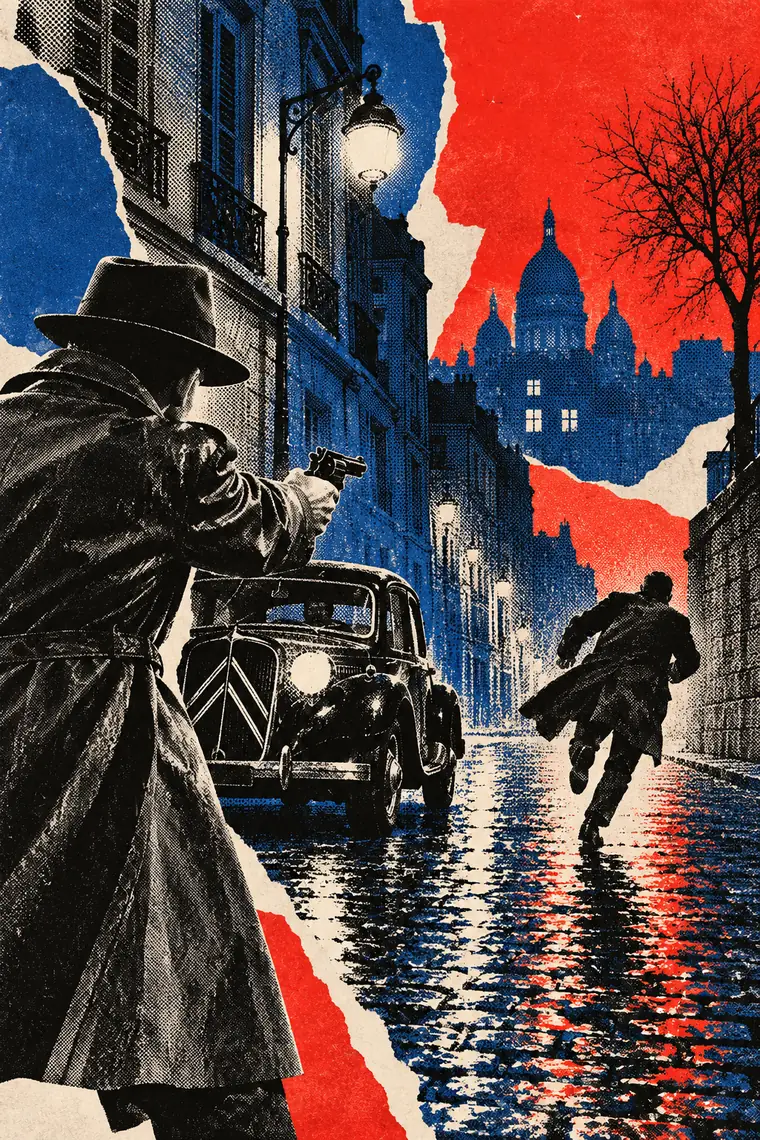
Flic Story is a 1975 crime film directed by Jacques Deray and based on the memoir of Roger Borniche, a real French police inspector, about his long pursuit of the gangster and murderer Émile Buisson in the years after the Second World War. Alain Delon, who also produced the film, plays Borniche; Jean-Louis Trintignant plays Buisson, quiet, polite and terrifying. Buisson escapes from a psychiatric hospital in 1947 and returns to Paris, where he becomes public enemy number one, killing informers and anyone he suspects of betraying him. Borniche, a methodical detective who distrusts the brutal habits of his colleagues, follows him for years. The real Buisson was guillotined in 1956. The film was seen by almost two million people in France and is one of the best policiers of the 1970s.
The hunt
Flic is French slang for "cop". The story begins with Buisson's escape from the asylum at Villejuif. Back in Paris, he shoots Fredo, the accordion player who had given him away, and organises a hold-up at a smart restaurant that ends in a bloody chase through the streets.
Borniche, of the Sûreté Nationale, is given the case. An informer helps him locate Buisson, and is soon murdered too. Buisson escapes with the help of his brother, Jean-Baptiste, and his girlfriend Suzanne, who say nothing to the police. Borniche persists through alleys, rooftops, car chases and shoot-outs, while his relationship with his girlfriend Catherine, played by Claudine Auger, puts her in danger.
Two stars, two styles
Delon plays Borniche as a modern professional: neat, patient, ironic, impatient with his superiors' bureaucracy and with politicians and journalists who want quick results. He is more human than the killers Delon played for Melville in Le Samouraï and Le Cercle rouge.
Trintignant, in a rare villain's role, is the reason to see the film. His Buisson is small, soft-spoken and unremarkable to look at, and capable of shooting a man in the middle of a sentence. The scenes in which hunter and hunted finally face each other, and an odd mutual respect develops, are the most interesting part of the film.
Postwar France
Deray, who had directed Delon in La Piscine (1969) and Borsalino (1970), recreates the late 1940s and early 1950s with care: the cars, the bars, the trench coats, the grey suburbs. Claude Bolling's score adds a period jazz colour. The screenplay was co-written by Alphonse Boudard, a novelist who knew the criminal underworld of the period from the inside.
The film was part of a wave of French policiers in the 1970s based on real criminals and real police cases, which audiences loved. Delon produced several of them.
The real story
Roger Borniche left the police in the 1950s and became a private detective, then a best-selling author with Flic Story (1973) and a series of other books about his cases. Émile Buisson was executed on 28 February 1956.
The film takes liberties with the facts, as Borniche's book already did. It is best seen as a solid, well-acted thriller rather than a documentary.
For more crime films, see the best French thrillers and the best French films of the 1970s.