Crime drama · 1963 · France, Italy
Landru 1963
Directed by Claude Chabrol. Known in English as Bluebeard.
- DirectorClaude Chabrol
- Running time119 min
- CountryFrance, Italy
- Decade1960s
Review by Eleanor Hale
Landru, released in the United States as Bluebeard, is Claude Chabrol's 1963 film about Henri Désiré Landru, the French serial killer who, during the First World War, courted lonely middle-class women through newspaper advertisements, lured them to a villa outside Paris, killed them, burned their bodies in a stove and lived off their savings. He was tried in 1921 and guillotined in 1922. Chabrol turns the story into a black comedy about a respectable family man with a terrible sideline, and about a society that sends millions of young men to die at the front while it is shocked by one murderer. The dialogue was written by the novelist Françoise Sagan. Charles Denner, bald, bearded and courteous, plays Landru.
The story
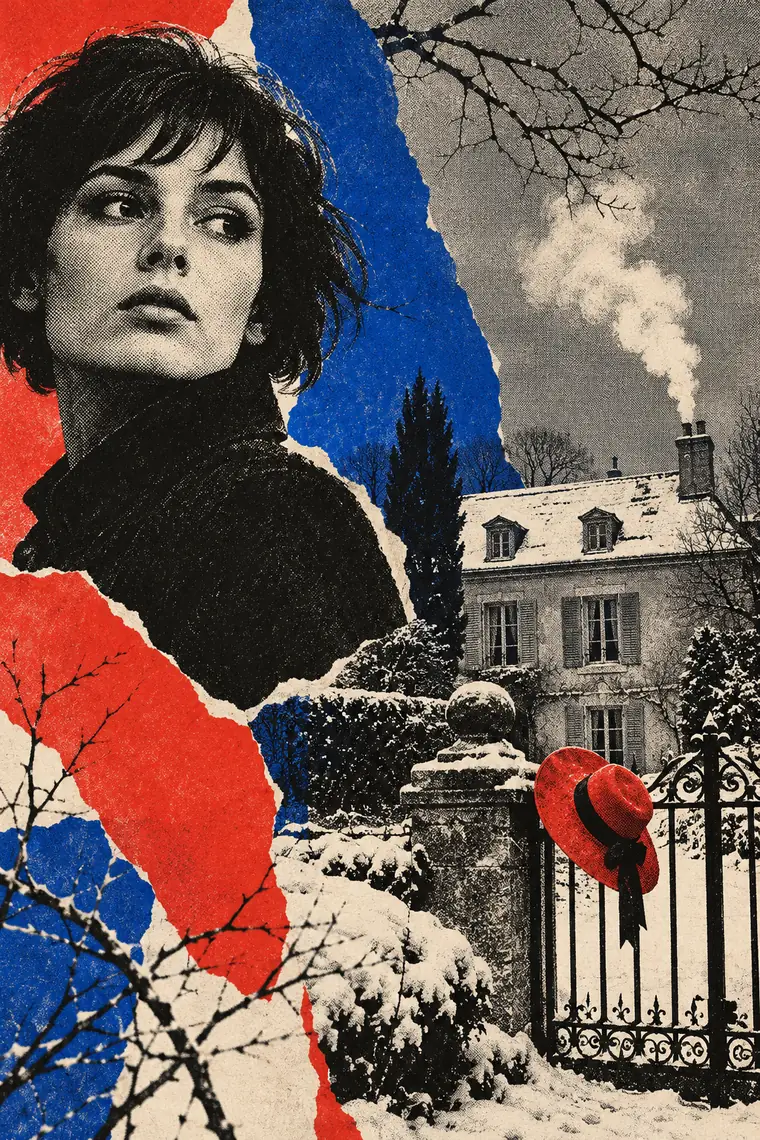
Paris, during the war. Landru, a seemingly respectable middle-aged man, has a wife, four children and a mistress to support, and not enough money. Under a series of false names, he answers the lonely-hearts columns and courts women of a certain age who have some savings. He persuades them to sign over their money, takes them to his country house at Gambais, and they disappear. Smoke rises from the chimney.
Eventually the families of the missing women grow suspicious, and Landru is arrested. At his trial he is eloquent, witty and indignant, denying everything and confident that no jury will convict a man of his intelligence. He is condemned to death.
A black comedy
Chabrol was fascinated throughout his career by murder in respectable surroundings. Here he does not show the killings. The women are seen with Landru, they are charmed, they arrive at Gambais, and then the film cuts to the chimney. This discretion makes the film funnier and more chilling at once.
Chabrol also keeps the war constantly in view, in the background of the story. While Landru disposes of a few women, the war is killing men by the hundred thousand, and nobody is put on trial for that. The point is made with irony rather than speeches.
The women
Landru's victims are played by a remarkable set of actresses: Michèle Morgan, Danielle Darrieux and the German star Hildegard Knef, among others. Each appears for only a few scenes. Stéphane Audran, Chabrol's wife and regular star, plays Landru's mistress.
Denner
Charles Denner was a stage actor not yet well known on screen. His Landru, with his bald head, thick beard and impeccable manners, became his breakthrough. He later played the hero of Truffaut's L'Homme qui aimait les femmes (1977), another man devoted to pursuing women, in a very different way.
In Chabrol's career
Chabrol had been one of the first New Wave directors to make a feature, with Le Beau Serge (1958). By 1963 he was making more commercial films, and Landru, co-produced by Georges de Beauregard and Carlo Ponti, was one of the most lavish. It points ahead to his great crime films of the late 1960s and 1970s, such as Le Boucher (1970).
The subject had already inspired Charlie Chaplin's Monsieur Verdoux (1947), which follows a fictional character modelled on Landru. Chabrol's film stays closer to the historical case.
For more crime films, see the best French thrillers and the best French films of the 1960s.