Decade
The best French films of the 1960s
The decade of the New Wave, and also of Melville's gangsters, Demy's musicals and France's biggest comedy hits.
By Eleanor Hale
The 1960s are the decade most people think of when they think of French cinema. The New Wave directors, many of them former critics, made films cheaply in real streets with young actors, and brought a new freedom to the way stories were told. Their influence spread around the world. At the same time, French audiences flocked to comedies with Louis de Funès and Bourvil, to Jean-Pierre Melville's crime films and to Claude Lelouch's romance. By 1968, when protests shut down the Cannes festival, the New Wave had split into very different paths.
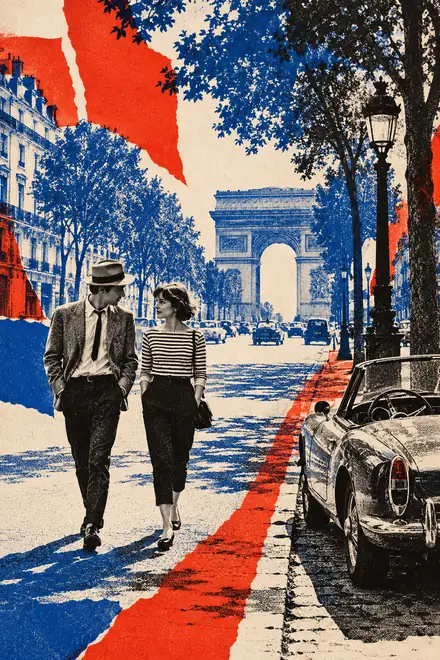 Crime dramaÀ bout de souffleJean-Luc Godard · 1960
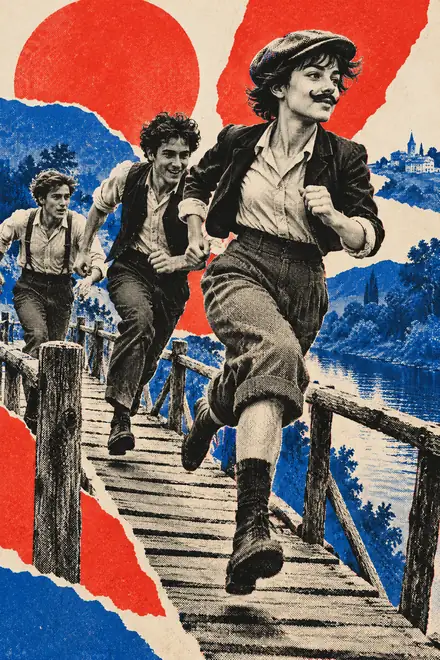 Romantic dramaJules et JimFrançois Truffaut · 1962
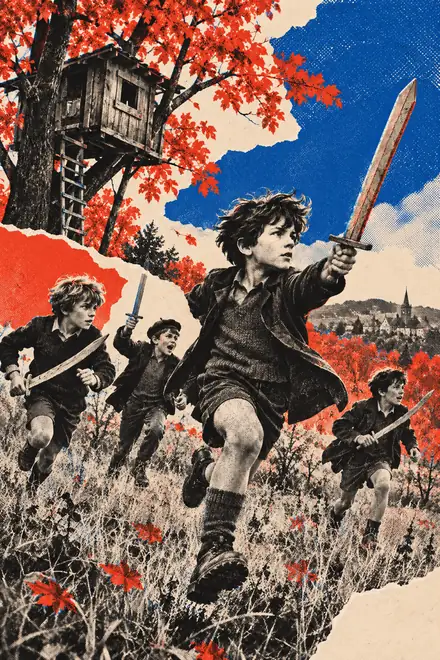 Family comedyLa Guerre des boutonsYves Robert · 1962
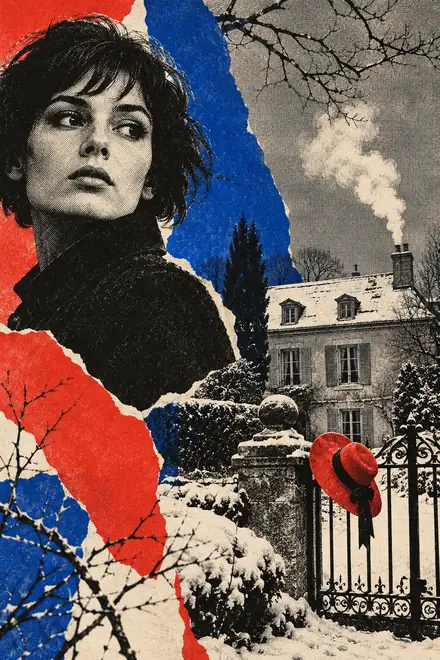 Crime dramaLandruClaude Chabrol · 1963
À bout de souffle (Jean-Luc Godard, 1960)
A petty crook and an American girl in Paris, cut with jump cuts. The film that defined the New Wave style.
Les Yeux sans visage (Georges Franju, 1960)
A surgeon kidnaps young women to give his disfigured daughter a new face. Poetic horror, with the daughter's white mask as its central image.
Le Trou (Jacques Becker, 1960)
Five prisoners dig their way out of La Santé prison. Becker's last film, almost without music, absorbing from start to finish.
L'Année dernière à Marienbad (Alain Resnais, 1961)
In a baroque hotel, a man insists that a woman met him the year before. She does not remember. A puzzle without a solution.
Cléo de 5 à 7 (Agnès Varda, 1962)
A singer waits for the results of a medical test, and we follow her through Paris in close to real time. Varda's breakthrough.
Jules et Jim (François Truffaut, 1962)
Two friends and Catherine, the woman they both love, before and after the First World War. Jeanne Moreau's great role.
La Guerre des boutons (Yves Robert, 1962)
Two gangs of village boys at war over buttons and braces. A family favourite in France.
Landru (Claude Chabrol, 1963)
The serial killer who courted lonely women during the First World War, as a black comedy written by Françoise Sagan.
Le Feu follet (Louis Malle, 1963)
Maurice Ronet as a recovering alcoholic who visits his friends one last time. Set to the piano music of Erik Satie.
Le Mépris (Jean-Luc Godard, 1963)
A marriage falls apart during the making of a film of the Odyssey. Bardot, Piccoli, Fritz Lang and the Villa Malaparte.
Les Tontons flingueurs (Georges Lautner, 1963)
A retired gangster inherits a dead friend's business and his teenage daughter. Michel Audiard's dialogue is quoted endlessly in France.
Les Parapluies de Cherbourg (Jacques Demy, 1964)
A sung love story in a seaside town, parted by the Algerian War. Palme d'Or.
Pierrot le fou (Jean-Luc Godard, 1965)
Belmondo and Anna Karina flee Paris for the south, in bright primary colours. Godard's road movie.
La Grande Vadrouille (Gérard Oury, 1966)
Louis de Funès and Bourvil help British airmen across occupied France. For decades the most successful French film at the French box office.
Un homme et une femme (Claude Lelouch, 1966)
A widow and a widower meet at their children's boarding school in Deauville. Francis Lai's theme is famous worldwide.
Le Samouraï (Jean-Pierre Melville, 1967)
Alain Delon as a silent hitman hunted by police and employers. Pure style.
Playtime (Jacques Tati, 1967)
Monsieur Hulot in a Paris of glass and steel, built as a giant set. A financial disaster and a visual marvel.
L'Armée des ombres (Jean-Pierre Melville, 1969)
The Resistance as a world of fear, betrayal and execution, with Lino Ventura and Simone Signoret.
Where to go next
Continue with the best French films of the 1970s, or go back to the 1950s.